Gear guide
What UPF 50+ means, and where a sun shirt stops protecting you
The rating is about fabric, not about you. Here is what it covers, what wets and stretches it, and which Soothfeel departments carry it.
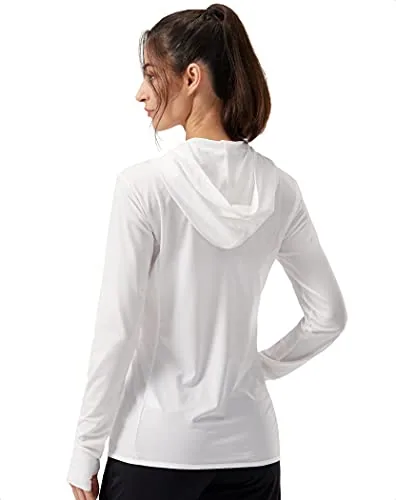
A UPF rating is a property of cloth. It says how much of the sun's ultraviolet light a fabric lets through when it is dry, flat and undamaged, and UPF 50+ is the top of the scale: at most one fiftieth gets through. 34 of the styles we list carry it, and this page is about what that number does and does not do for you.
Nothing here is medical advice. The Centers for Disease Control and Prevention publish a plain page on sun safety, we read it with our own browser, and the lines we quote below are theirs word for word, with the date we read them at the bottom.
What the number is measuring
Sunscreen is rated SPF and fabric is rated UPF, and the two are not the same test. SPF measures how long skin takes to redden with the product on it. UPF measures the light that passes through a piece of cloth on a bench. A UPF 50+ shirt is not fifty times anything about your skin. It is a shirt that stops roughly ninety-eight per cent of the ultraviolet reaching it.
That makes it more dependable than sunscreen in one way and less in another. It does not wear off, sweat off or wash off during the day. But it stops at the hem, the cuff and the collar, and everything outside those lines is on its own.
The CDC puts the general case simply:
Clothes made from tightly woven fabric offer the best protection. A wet T-shirt doesn't protect you as well as a dry one, and darker colors may protect more than lighter colors. Some clothing is certified to protect against UV rays.
Centers for Disease Control and Prevention, Sun Safety
Three practical facts sit in that quote. Weave matters, wet fabric protects less, and colour matters. A UPF rating is the maker's way of saying the weave has been measured. The other two are on you.
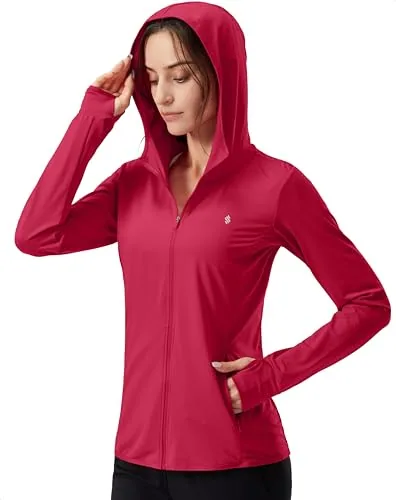
UPF 50+ sun shirts and jackets
All sun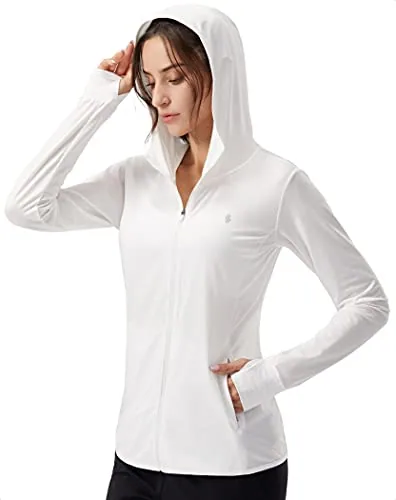

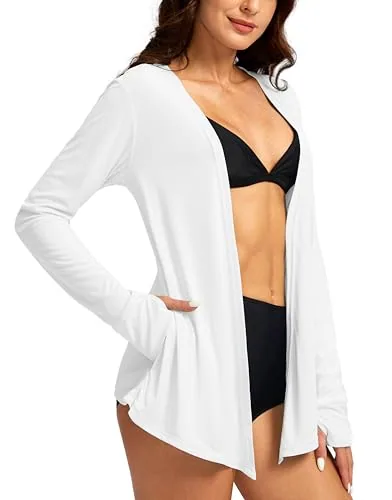
Which departments carry the rating
The rating is not only in the sun department. The cargo capris are rated, so are several tennis tops and the whole swim line, and the sun activity page gathers every rated piece from every department into one grid. The table below counts them by department.
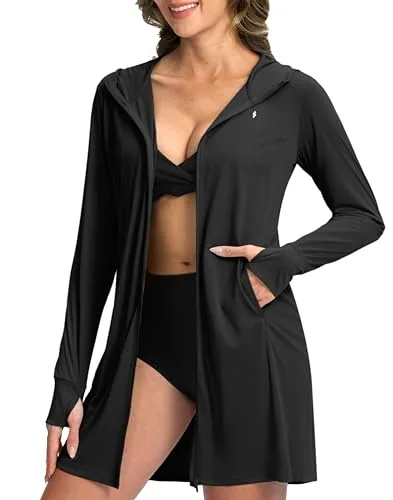
The sun department itself splits by how a piece closes. Hooded pullovers with thumbholes are the fishing and hiking pieces: the hood covers the neck, the thumbholes cover the back of the hand. Zip jackets go on and off in a car park. Button-down shirts are the ones that pass as a shirt at lunch.
What the sun department is not is warm. These are thin, quick-drying layers meant for July over a tank or a swimsuit. In April, or at altitude, you will want a layer from the layers department over the top, and that layer carries no rating.
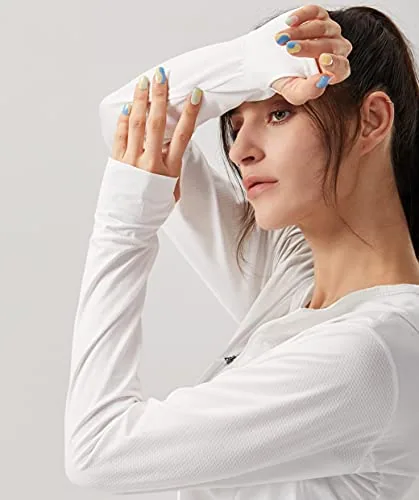
Where the shirt stops
A long-sleeve rated shirt covers the arms and torso. It does not cover the face, the ears, the back of the neck under a ponytail, or the hands past the cuff, and those are the places a day outside hits hardest. The CDC's advice on a hat is direct:
For the most protection, wear a hat that has a brim all the way around that shades your face, your ears, and the back of your neck.
Centers for Disease Control and Prevention, Sun Safety
A hood on a sun shirt does part of that job and a brimmed hat does the rest. Sunscreen covers what is left, and the CDC is equally clear that the two are partners rather than substitutes:
sunscreen works best when combined with other options like protective clothing and hats.
Centers for Disease Control and Prevention, Sun Safety
So the honest description of a UPF 50+ shirt is this: it is the part of a sun plan that you cannot forget to reapply. It is not the whole plan.
Wet, stretched and worn
The rating is measured on dry, flat fabric, and three things move a real garment away from that.
- Water. A wet knit lets more light through than a dry one, which is the reason a rash guard is rated separately from a sun shirt. The rash guards in the swim department are built to hold their rating wet, and a sun shirt worn swimming is doing less than its label.
- Stretch. A rated fabric pulled tight over a shoulder opens its weave. A size that fits loosely protects better than a size that fits tight, which is the opposite of how most people buy.
- Wear. A season of washing thins any knit. A rated shirt in its third summer is still a shirt, and it is no longer the shirt the label measured.
None of that argues against the rating. It argues for buying the loose size, keeping the shirt dry when it can be, and treating an old favourite as a layer rather than as a shield.
Rash guards and swim pieces rated wet
All swim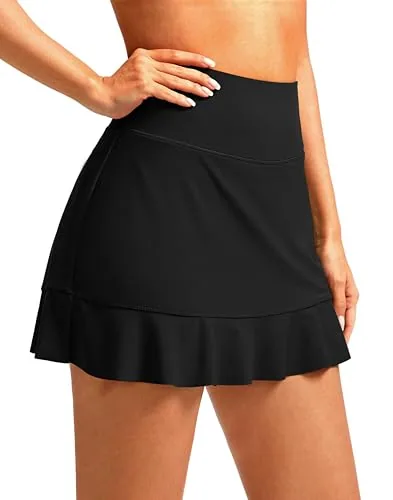
Swim Skirt Bathing Suit High Waisted with Pocket
4.5 out of 5 (2,049) $19.98 - $19.99 Sizes S to 3XL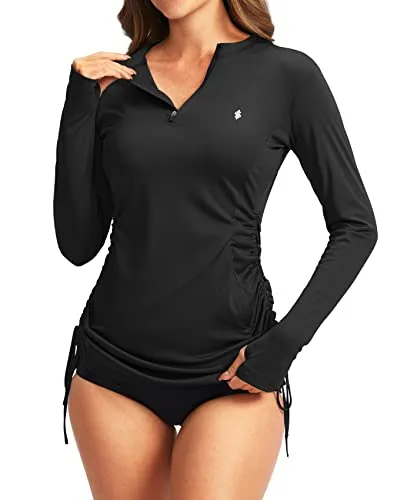
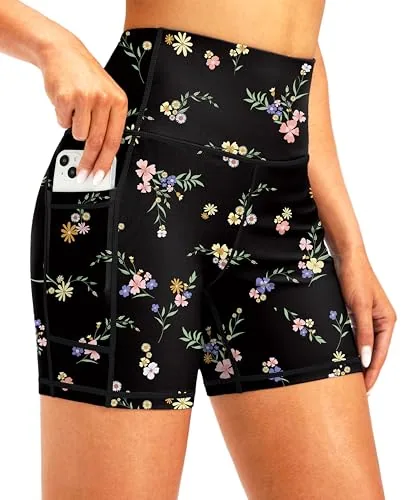
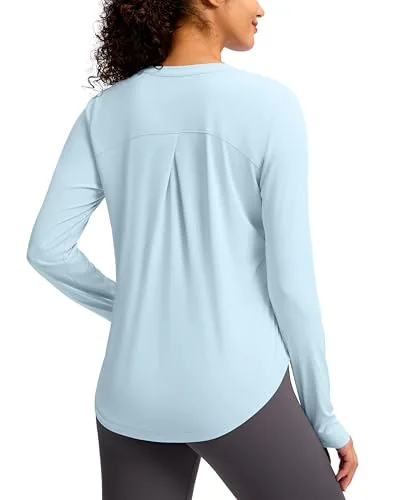
UPF 50+ Sun Shirts Long Sleeve SPF UV Protection Rash
4.5 out of 5 (783) $12.99 - $14.98 Sizes L to 3XLSun shirts and rash guards are different garments
Both carry UPF 50+ here, and they are cut for different jobs. A rash guard is close-fitting so it does not balloon in water, it is made of a swim knit that holds its rating wet, and the cropped ones have a built-in bra. A sun shirt is loose, dries faster in air, and comes with pockets, hoods and zips that a swim garment does not carry.
Buy the rash guard for the water and the sun shirt for the walk to it. Wearing one for the other's job works, and it works less well than the piece made for it.
The rest of the plan
A rated shirt does one job in a list of four, and the CDC page names the others without ranking them against each other: shade, clothing, a hat, sunscreen. The order most people actually use outdoors is clothing first because it is already on, then a hat because it is in the car, then sunscreen for the face and hands, then shade at lunch.
Two groups need the plan more than the rest. Babies, for whom the CDC is explicit that sunscreen is not the tool:
Sunscreen is not recommended for babies who are 6 months old or younger.
Centers for Disease Control and Prevention, Sun Safety
And anyone spending a whole day on water, sand or snow, where light arrives from below as well as above and a shirt's hem stops mattering because the reflection comes up under it. On those days, cover more than feels necessary and keep the hat on.
Soothfeel makes clothing and nothing else on that list. We say so because a page about sun protection that only sells shirts is doing half its job, and because the shirt works best when the rest of the list is there too.
How we count the rated pieces
A piece is listed as rated on this site only where the maker states UPF 50+ in the product text or the title, and the rating then appears in the facts under the name on its page. 34 styles carry it today. Where a piece has no rating line, it has no rating we can confirm, and we would rather leave the line out than infer one from a photograph.
The rating is also not a promise about care or age. A rated fabric that has been through a hot dryer, bleached, or stretched thin is a different fabric from the one that was measured. The care guide explains what changes a knit and what does not.
Cover first, then rate
The rating only helps skin the fabric covers, and the CDC leads with coverage before it mentions ratings at all:
When possible, wear long sleeves and long pants or skirts.
Centers for Disease Control and Prevention, Sun Safety
That order is the right one. A long-sleeve rated shirt over rated capris covers more than a rated tank over unrated shorts, whatever the numbers on the labels. The hiking and travel page pairs the rated capris and pants with the sun shirts for exactly that reason.
If you are choosing one piece for a summer, choose the hooded sun shirt: it covers the most skin for the least weight, dries on your back, and goes over everything else in the range. The care guide explains how to wash it so it keeps the weave it was rated with.
Every rated piece, on the sun page
All sun protectionSources we read
| Source | Published by | Read |
|---|---|---|
| Sun Safety | Centers for Disease Control and Prevention | 4 September 2026 |